
Stablecoin Depeg Crisis (xUSD/YU/USDX): The Liquidity Paradox on Morpho
Summary: A user with deUSD collateral backing a USDC loan on Morpho Blue faces a complex liquidity paradox during the xUSD/YU/USDX crisis. Repaying means getting illiquid deUSD back, while not repaying risks liquidation. Our experts analyze both scenarios and provide a strategic framework for decision-making.
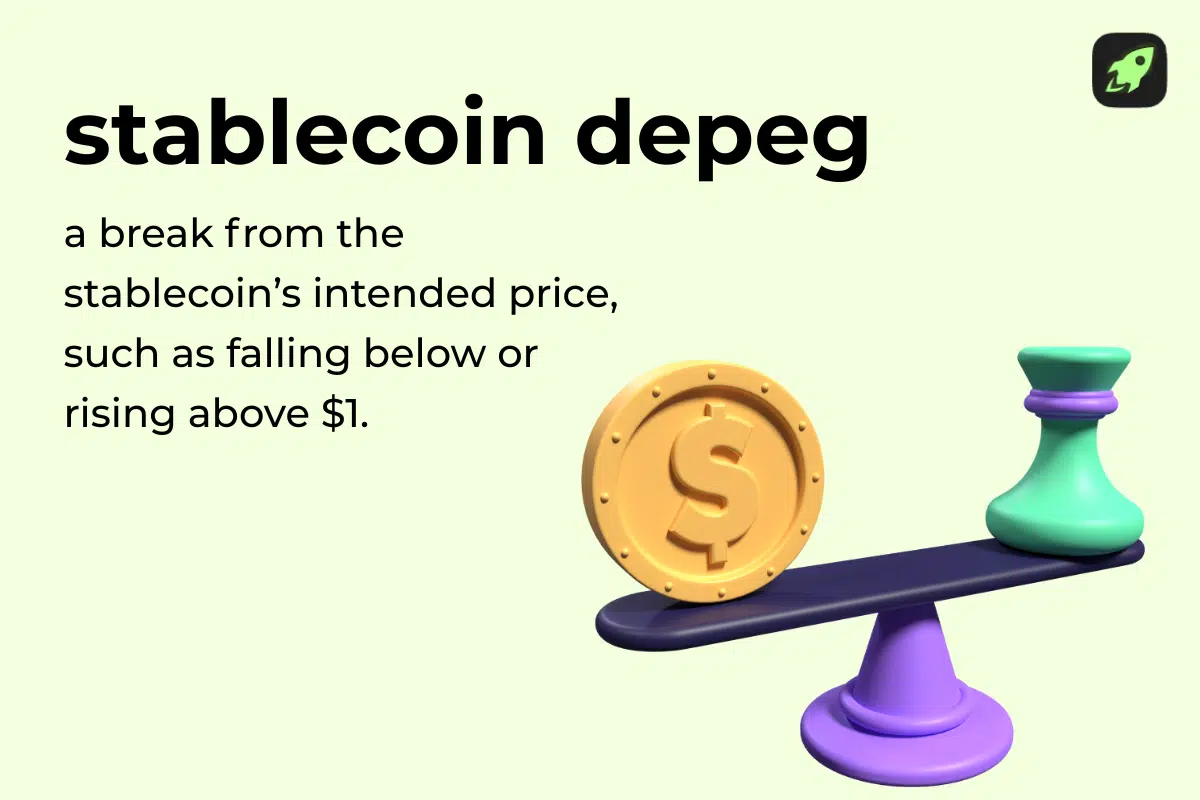
Background: The "Black November" of Stablecoins
In late 2025, the DeFi market is experiencing an unprecedented crisis of confidence. Following massive bad debt in Stream Finance (xUSD), both USDX and YU have depegged, spreading panic across the sector.
Elixir's deUSD, despite its delta-neutral hedging mechanism, has not been immune. Due to the collapse of its basis trading counterparties, deUSD has depegged to $0.92. While the team claims it is fully backed, liquidity on secondary markets is drying up.
User Inquiry: Facing Liquidation
User: DeFi_Whale_0x
Platform: Morpho Blue (Ethereum Mainnet)
Position: 150,000 deUSD collateral (about $138,000 at $0.92) against 110,000 USDC debt, with current LTV near 79.7% and liquidation threshold at 86%. Core risk: collateral price is falling while debt remains stable.
Question: "My collateral is deUSD which is depegging. Should I add more collateral Or should I repay my USDC loan to avoid liquidation What should I do"
Expert Diagnosis: The Liquidation Math
Critical Understanding: You have deUSD collateral (depegging asset) backing a USDC debt (stable asset). This is the worst-case scenario in a depeg event.
1. The Liquidation Math (You Are in Danger)
Let's calculate your real LTV as deUSD continues to fall. At $0.92, collateral value is about $138,000 and debt remains $110,000, so LTV is roughly 79.7% versus an 86% liquidation threshold. That leaves only a 6.3% safety buffer, which is narrow in a fast depeg window.
If deUSD drops to $0.78: LTV = $110,000 / ($150,000 × $0.78) = $110,000 / $117,000 = 94% LIQUIDATED
2. Why This is NOT an Arbitrage (It's a Trap)
Your collateral is losing value while the debt remains constant. This is the inverse of a profitable short position.
Numerator-denominator dynamics are unfavorable: debt value stays fixed near $110,000 while collateral value shrinks as deUSD falls. The direct consequence is rising LTV and accelerating liquidation risk even if user behavior does not change.
The Death Spiral: As deUSD falls, your LTV rises. If it hits 86%, liquidators will seize your 150,000 deUSD (worth ~$117,000 at $0.78) to repay the $110,000 USDC debt. You lose everything.
Risk Control: The Liquidation Countdown
⚠️ Critical: You Have ~7.3% Price Drop Before Liquidation
Your position will be liquidated when LTV reaches 86%. Let's calculate the trigger price:
Liquidation Trigger Calculation: using
(Debt / Collateral Amount) / Liquidation LTV, the trigger price is approximately
$0.853. From a current price of $0.92, only a $0.067 decline (about 7.3%) is needed to hit
liquidation.
Given the current market panic (xUSD/YU/USDX contagion), a 7.3% further drop is highly likely within hours.
Strategic Analysis: The Liquidity Paradox
This is NOT a simple "repay or liquidate" decision. There is a hidden liquidity trap on BOTH sides.
The Liquidity Paradox
You are facing a complex decision matrix where both actions carry severe risks:
⚠️ Critical Insight: Repaying Might Be Worse Than Liquidation
Option 1: Repay the Debt (The Liquidity Trap)
What happens if you repay:
- You spend $110,000 USDC (hard, liquid asset) to close the debt.
- You retrieve 150,000 deUSD (currently worth ~$138,000).
- The Trap: If deUSD liquidity has dried up, you cannot sell your 150,000 deUSD for USDC/USDT.
- Result: You traded $110,000 in liquid USDC for $138,000 worth of illiquid, unsellable deUSD. Net loss: potentially $110,000 if deUSD becomes worthless.
Option 2: Do Nothing and Monitor (The Liquidation Gamble)
What happens if you don't repay:
- Scenario A (deUSD stabilizes at $0.85-$0.92): Your LTV stays below 86%. You survive. Your debt remains $110,000 USDC, but your collateral is worth less. You can wait for recovery.
- Scenario B (deUSD drops to $0.78): LTV hits 94%. Liquidation is triggered.
- The Hidden Protection: If deUSD liquidity is dead, liquidators cannot execute. They need to sell your deUSD to repay the USDC debt. If there's no liquidity, liquidation may fail or be delayed.
- Worst Case: Liquidators find a way to dump deUSD at a huge discount. You lose your collateral.
- Best Case: Liquidation fails due to lack of liquidity. Your position stays open. deUSD eventually recovers. You keep your collateral.
Option 3: Partial Repayment (Risk Mitigation)
A middle ground: repay 30,000 USDC to reduce debt to 80,000 USDC, which lowers LTV to roughly 58% at current prices and preserves a sizable USDC liquidity reserve. If deUSD recovers, the remaining debt can be handled later; if liquidity deteriorates further, total capital at risk is reduced versus full repayment.
Our Recommendation: Monitor and Decide Based on Liquidity
Step 1: Check deUSD Liquidity RIGHT NOW. Inspect deUSD/USDC pool depth on Uniswap or Curve and simulate a 10,000 deUSD sell. If expected slippage is above 5%, liquidity is likely failing and full repayment can trap capital in illiquid collateral. If slippage stays below 2%, repayment options remain more practical.
Step 2: Monitor Your LTV Every Hour. Set alerts at $0.88, $0.85, and $0.80. Near $0.88 (about 83% LTV), partial repayment becomes a practical risk-reduction move. Around $0.85, the position is effectively at threshold and requires an immediate execution decision.
Step 3: The Final Decision at $0.85. At threshold, the decision hinges on real-time liquidity. If slippage remains severe, forced repayment may convert liquid USDC into hard-to-exit collateral. If liquidity is still functional, rapid repayment and staged collateral sales are usually safer than waiting for liquidation mechanics to decide the outcome.
💡 Key Insight: In a liquidity crisis, doing nothing might be safer than repaying. Your $110,000 USDC is more valuable than illiquid deUSD.
Get Emergency DeFi Strategy Consultation

About the Author: Carlos Vendrell
Last updated: