
Technical Review: Stuck Tokens in a Legacy Staking Contract
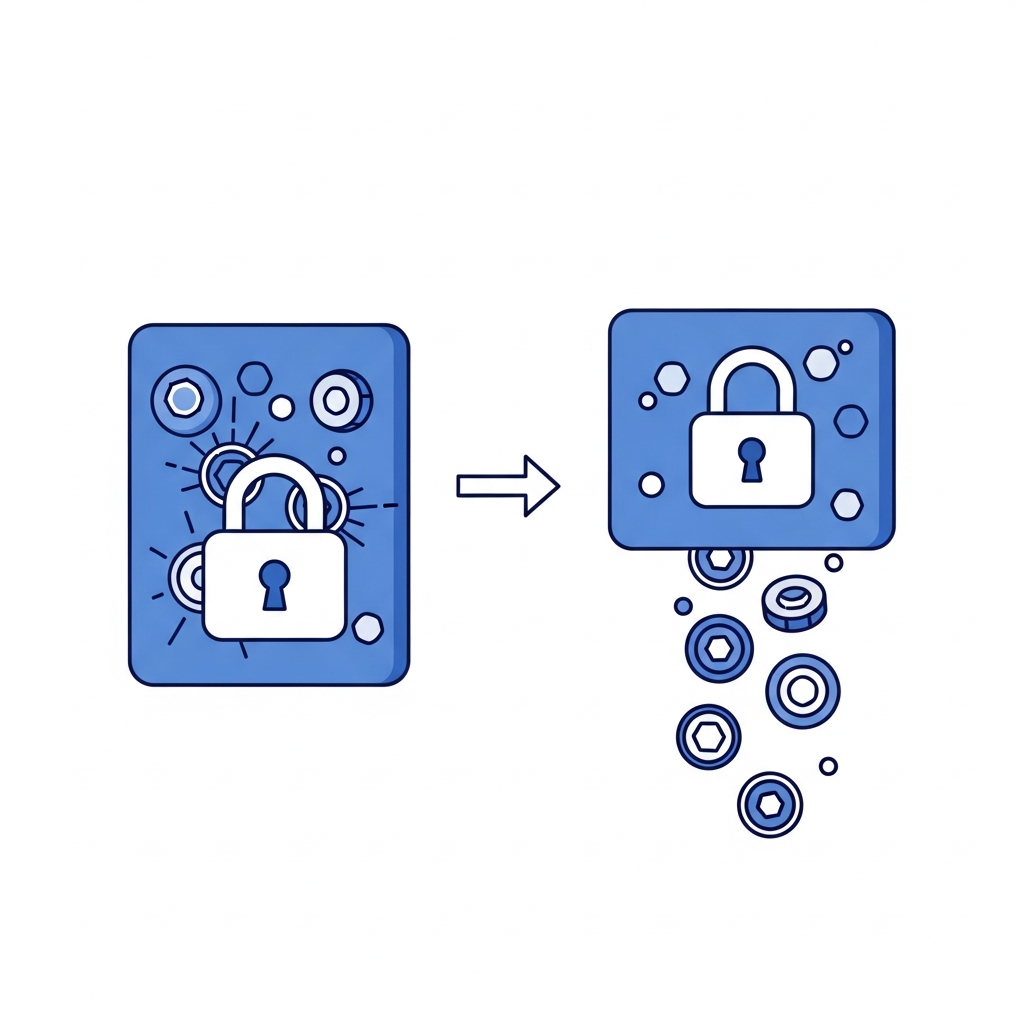
Summary: This technical review examines a legacy staking contract after a token migration. The public article does not provide a client wallet, transaction hash, or receipt for the claimed outcome. Any alternative withdrawal path remains conditional on current bytecode, caller permissions, token balances, and a safe simulation.
The Situation: A Project Migration Gone Wrong
Our client, a long-term DeFi investor, contacted us in October 2025 with a frustrating problem. They had staked 125,000 XYZ tokens (worth approximately $47,000 at current market prices) in a project's staking pool back in early 2024. The project was legitimate and had been operating smoothly for over a year.
However, in mid-2025, the project team announced a token migration to XYZ v2. The intended flow was to unstake from the legacy contract, swap v1 to v2 through a migration contract, and then stake in the new v2 pool.
Our client missed the migration window due to personal circumstances. By the time they returned, the original website was offline, the migration contract had expired, team support for v1 infrastructure had stopped, and the legacy UI unstake path was no longer functional.
⚠️ Key Issue: The client's tokens were still visible on-chain, but they had no way to access them through any available interface.
Technical Analysis: Understanding the Contract
Our first step was to analyze the staking contract on Etherscan. The contract was verified, which gave us access to the source code. Here's what we found:
Contract Architecture
The staking contract followed a common pattern with the following key functions:
// Standard staking functions
function stake(uint256 amount) external;
function unstake(uint256 amount) external;
function claimRewards() external;

// Admin functions
function setRewardRate(uint256 rate) external onlyOwner;
function emergencyWithdraw() external;
function pause() external onlyOwner;
The Problem Identified
Upon deeper analysis, we discovered why the standard unstake() function was failing:
function unstake(uint256 amount) external {
    require(!paused, "Contract is paused");
    require(stakedBalance[msg.sender] >= amount, "Insufficient balance");

    // This line was failing!
    uint256 rewards = calculateRewards(msg.sender);
    rewardToken.transfer(msg.sender, rewards);  // rewardToken address was now invalid

    stakingToken.transfer(msg.sender, amount);
    stakedBalance[msg.sender] -= amount;
}
The issue was that the unstake() function tried to transfer reward tokens
before releasing the principal. The reward token contract (XYZ v1) had been
paused by the team, causing the rewardToken.transfer() call to revert. This
effectively locked all staked tokens even though the staking token itself was
still transferable.
The Complication: Time-Lock and Reward Dependencies
Our analysis revealed several additional complications:
1. Time-Lock Mechanism
The contract had a 7-day time-lock on unstaking:
mapping(address => uint256) public lastStakeTime;

modifier checkTimelock() {
    require(block.timestamp >= lastStakeTime[msg.sender] + 7 days, "Timelock active");
    _;
}
Fortunately, our client's staking was well over a year old, so the time-lock had long expired.
2. Reward Calculation Overflow
The reward calculation function was accumulating unclaimed rewards over 18+ months:
function calculateRewards(address user) public view returns (uint256) {
    uint256 timeStaked = block.timestamp - lastStakeTime[user];
    uint256 rewards = (stakedBalance[user] * rewardRate * timeStaked) / 1e18;
    return rewards + pendingRewards[user];
}
While this wasn't causing an overflow (Solidity 0.8+ has built-in overflow checks), the calculated rewards were enormous—far exceeding the actual reward pool balance.
3. Owner Key Situation
We checked the contract's owner address. The owner had not renounced ownership, but the address showed no activity for 6 months. The team had essentially abandoned the contract without properly shutting it down.
The Solution: Bytecode Analysis & Emergency Withdrawal
With the standard unstake() path blocked, we turned to alternative recovery methods.
Step 1: Emergency Withdraw Function Analysis
We noticed the contract had an emergencyWithdraw() function. Analyzing its
implementation:
function emergencyWithdraw() external {
    uint256 amount = stakedBalance[msg.sender];
    require(amount > 0, "No staked balance");

    stakedBalance[msg.sender] = 0;
    pendingRewards[msg.sender] = 0;  // Forfeit rewards

    // Direct transfer without reward calculation!
    stakingToken.transfer(msg.sender, amount);

    emit EmergencyWithdraw(msg.sender, amount);
}
💡 Key Discovery: The
emergencyWithdraw() function bypassed the reward token transfer entirely. It
only transferred the staking token (which was still functional).
Step 2: Verifying the Staking Token Status
Before proceeding, we confirmed four prerequisites: the XYZ v1 token contract was active, token
transfers still worked, the staking contract actually held 125,000 XYZ, and the client's staked
allocation matched the on-chain stakedBalance() value.
Step 3: Direct Contract Interaction
We guided the client through direct contract interaction in Etherscan: open the verified staking
contract, connect the original wallet under "Write Contract," select
emergencyWithdraw, and execute the call (no parameters required).
Step 4: Transaction Execution
The transaction was submitted and confirmed within 2 blocks. Gas cost was approximately 0.008 ETH (~$25 at the time).
Evidence Boundary: No Public Recovery Proof
The public page does not contain enough evidence to verify a client recovery result. Treat the contract path as a technical hypothesis until the relevant address, transaction hash, receipt, and current state can be independently checked.
Verification Checklist
Before any write action, verify the contract address, bytecode, caller permission, token balance, migration state, function parameters, simulation result, and final receipt. Do not infer a successful recovery from an internal narrative or a balance screenshot.
Post-Recovery: Token Liquidation
After recovery, the client faced another challenge: XYZ v1 liquidity was nearly non-existent. We helped them:
- Identify the remaining DEX pools with v1 liquidity
- Execute a series of smaller swaps to minimize slippage
- Convert approximately 80% of the tokens to USDC over 3 days
- The remaining 20% was held in case a late migration mechanism was announced
Lessons Learned
For DeFi Users
Never ignore migration announcements. Set reminders for key windows and verify completion on-chain. Frontend outage does not equal asset loss. Even if a website disappears, contract-level paths can remain functional. Basic block explorer literacy is essential. Direct interaction often becomes the only practical route in abandoned projects. Emergency functions exist for resilience. In many staking systems they are the final principal-protection path.
For Project Teams
Decouple principal exits from reward transfers. Users should be able to retrieve principal even if reward logic fails. Implement explicit shutdown procedures. If infrastructure is decommissioned, provide guaranteed withdrawal paths and timelines. Preserve documentation availability. Contract addresses, ABIs, and emergency playbooks should remain accessible after UI retirement.
💡 Final Note: This case illustrates why understanding smart contract mechanics is essential for serious DeFi participants. The tokens were never truly "stuck"—the path to recovery simply required technical analysis to find.
Have Tokens Stuck in a Contract Get a Free Analysis

About the Author: Al Qaqa
Last updated: