
Resolv Incident Guide: How DeFi Users Track and Protect Assets
Summary: When a protocol incident breaks, most losses do not come from the first exploit headline. They come from rushed user actions in the next 60 minutes. This guide is written for regular users who need a calm, practical framework to find assets, verify ownership, and choose safe withdrawal paths.
Fact anchor (as of March 26, 2026): The execution patterns in this guide reflect real incident behavior seen in DeFi markets where frontend access, pool depth, and withdrawal priority can change quickly block by block.
Important: This article is educational. Always verify contract addresses and function calls against official announcements and on-chain explorer data before signing anything.
Background: Why Users Lose Time During Incident Windows
In most DeFi incidents, the first problem is uncertainty, not purely technical failure. Social channels fill with screenshots, half-verified claims, and copied "fixes". At the same time, frontends may lag, APIs may return stale balances, and portfolio tools may show conflicting data. If you rely on one interface, your decisions become slow and fragile.
The users who perform best follow a simple principle: they treat the blockchain as the source of truth, and everything else as secondary context. That single shift usually turns panic into an actionable plan.
User Scenario: "I Know I Have Funds, But I Can't See Everything"
A common situation looks like this: one wallet used lending, one wallet farmed rewards, and a third wallet bridged assets through a vault strategy months ago. When incident news breaks, the user opens three tabs and gets three different numbers. At this point, the right move is not to click withdraw repeatedly. The right move is to build a clean asset map first.
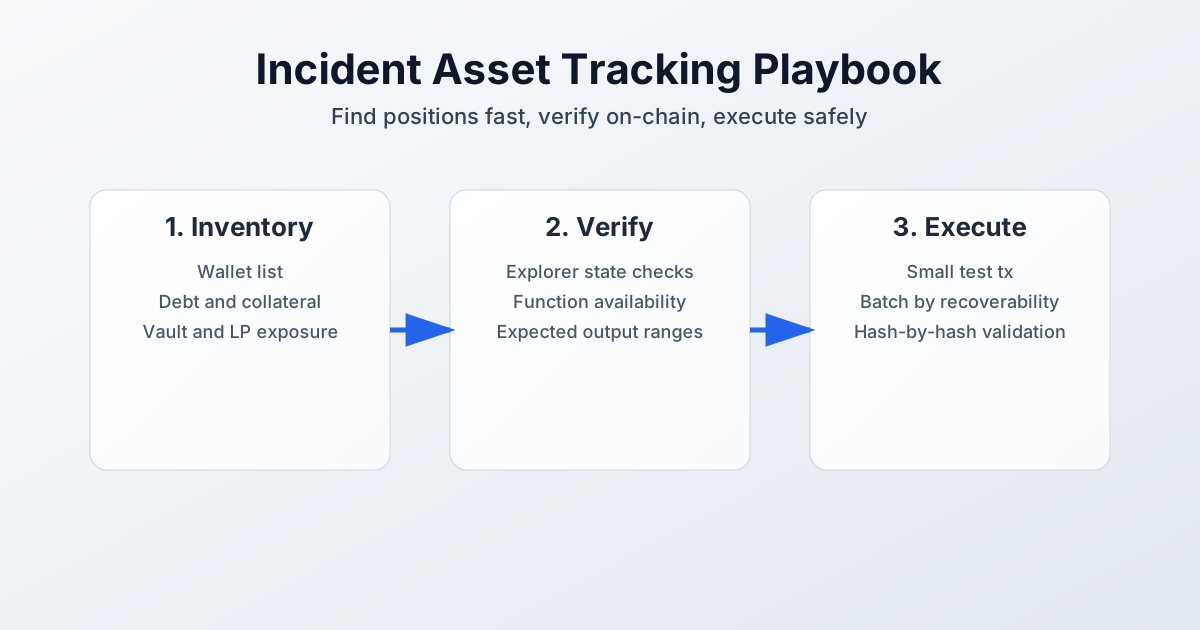
Start with wallet-by-wallet reconstruction. For each wallet, document principal balances, debt balances, vault shares, pending claims, and any cooldown state. This sounds basic, but it prevents the most expensive mistake we see: recovering one visible position while forgetting an older, larger one in a different contract route.
Diagnosis: UI Availability Is Not the Same as Contract Availability
Many users equate "frontend error" with "funds inaccessible". On-chain, those are often two different things. A broken UI can block your normal path while the contract still accepts direct calls. That is why verification must happen at function level: position values, claimable amounts, and available write functions such as withdraw, redeem, or emergencyWithdraw.
As a comparable market mechanism example, similar stress can appear in Morpho-style markets when a USR-related pool loses depth. At that moment, visible balances may still look normal, but executable liquidity can be thin. Users who wait for a clean frontend path may lose execution priority to bots that monitor mempool activity and race for the same withdrawal windows.
That is why incident-time planning should assume competition. If repayment transactions hit the market, scripts may attempt to frontrun, backrun, or immediately consume newly available liquidity. For regular users, the safest response is to pre-define transaction order, use smaller controlled batches, and avoid one-shot full-size exits that depend on a single price point. This example illustrates execution dynamics, not a claim about every specific incident path.
If you need a direct explorer workflow, follow How to Use Etherscan to Withdraw Assets and test with small size before any full execution.
Execution Framework: Recoverability First, Not Emotion First
Once balances are confirmed, prioritize by recoverability. Positions with immediate exits should be handled first. Positions that need one supporting step can follow. Long-lock positions are monitored with alerts and prepared transactions, not panic clicks. This order protects the largest liquid value while keeping gas and failure risk under control.
Before each critical transaction, define a safe path: destination wallet, expected output amount, max acceptable slippage, and fallback if the call reverts. Then run one small live test. A five-minute test often saves a six-figure mistake.
A useful operational pattern is to split your execution worksheet into three columns: Now, Next, and Monitor. "Now" includes paths that are immediately executable with low dependency risk. "Next" includes transactions requiring one prerequisite action, such as approvals or claim checkpoints. "Monitor" holds positions where execution should wait for on-chain condition changes. This simple structure helps users avoid context switching mistakes when stress is high.
Another practical safeguard is peer verification before high-value write calls. Even for solo users, this can mean copying decoded calldata and expected post-state into a checklist and reviewing it one more time before signature. The pause is short, but it catches surprising errors: wrong chain, stale nonce assumptions, token decimal mismatch, or inaccurate destination wallet mapping.
The Most Expensive Mistakes We See Repeated
The same pattern appears in nearly every incident cycle. Users trust screenshots instead of explorer proofs, sign urgent messages from unknown accounts, or run copied scripts they cannot audit. Another common failure is executing full size on the first transaction without any calibration. In incident conditions, "fast and blind" is usually slower and more expensive than "slightly slower and verified."
Users also underestimate post-withdraw risk. Recovering assets to the same wallet with broad historical approvals can reintroduce exposure immediately after a successful exit. Incident response should include destination-wallet hygiene, approval revocation, and evidence logging so each action remains explainable if later disputes or reconciliations are needed.
What To Do If Frontend Withdrawals Stay Blocked
If contract state is healthy but frontend paths remain blocked, recovery becomes a transaction design problem, not a custody problem. In those cases, non-custodial technical execution can still move funds safely by interacting directly with verified contracts. See our recovery service overview or request a case review on the contact page.
A common field approach is simple: repay only what is needed to restore safety margin first, then extract collateral in staged withdrawals when liquidity windows open. This avoids overpaying into unstable pools while preserving optionality if routing conditions change in the next blocks.
FAQ
Are my assets lost if the frontend is down
Not always. In many incidents, contracts are still accessible even when frontend operations fail.
Do I need to share private keys to recover
No. Legitimate recovery workflows should be non-custodial whenever possible.
Should I wait for official updates or act immediately
Do both in parallel: monitor official channels while verifying your positions on-chain and preparing safe transactions.

About the Author: Carlos Vendrell
Need Help Locating or Recovering Assets
Last updated: