
How to Use Block Explorers to Track Funds Safely
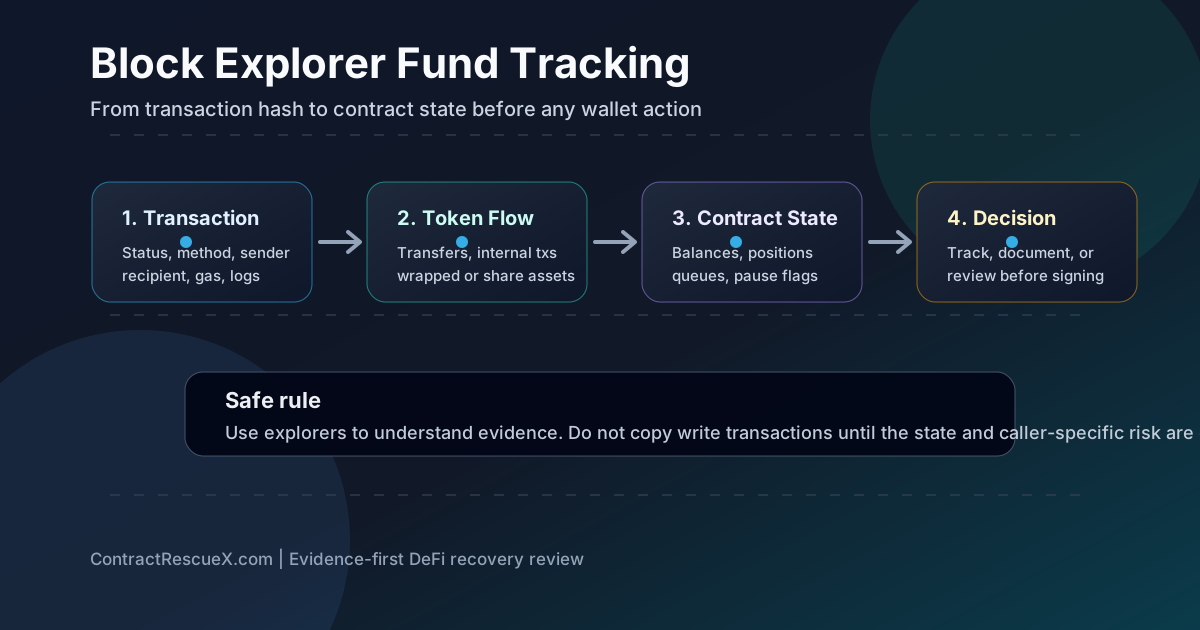
Summary: Block explorer fund tracking is not just pasting an address into Etherscan. A useful review follows the transaction hash, token transfer events, receiving contract, position records, and current state before deciding whether funds are lost, stuck, or still reviewable.
Quick Answer
To track funds with a block explorer, start with one transaction hash and build an evidence packet: chain, status, sender, recipient, token contract, token movement, internal traces, emitted logs, receiving contract identity, current balances, and any position evidence tied to the user's wallet. Do not move from reading to signing until those facts explain what changed and what remains uncertain.
| Fast check | What it answers | Stop if |
|---|---|---|
| Transaction status and chain | Whether the action executed on the network you intended. | The hash is on the wrong chain, failed, or only shows an approval. |
| Token transfers and logs | Which token contract emitted movement and whether a receipt, share, or claim signal appeared. | The token address, amount, or recipient does not match the user's story. |
| Recipient contract and current state | Whether the asset or user position still appears reviewable. | The contract is unknown, unverified, drained, or requires a write action you cannot explain. |
Block explorers are the first tool many users open when funds seem missing. They are also easy to misread. A transaction can be successful while the user interface still shows zero. A wallet can stop holding the original token while still holding a vault share, LP token, NFT position, or internal claim. A contract can receive tokens without giving the user a safe exit path. The explorer shows evidence, but the evidence has to be read in the right order.
The correct way to use block explorers for fund tracking is to move from a specific transaction to a specific asset path. Start with the transaction hash. Confirm the chain. Check status, method, sender, recipient, value, logs, token transfers, and internal transactions. Then compare that history with the current contract and wallet state. The goal is not to click every tab. The goal is to answer a narrow question: what does the chain say happened to this asset?
This workflow applies to Etherscan, Arbiscan, Basescan, BscScan, Polygonscan, SnowTrace-style explorers, Solana explorers in a different layout, and most chain-specific tools. Names and tabs vary, but the evidence categories are similar: transaction result, balance movement, event logs, contract identity, and current state. If you are still at the first triage stage, also read how to tell if crypto assets are really lost.
Start With the Transaction Hash
The transaction hash is the most reliable starting point because it points to one execution on one chain. Wallet balances, dashboards, and screenshots can be stale or incomplete. A transaction receipt shows whether the chain accepted the action, which account initiated it, which contract or address received it, how much gas was used, and what logs were emitted.
First, confirm that you are on the correct network. Many tracking mistakes happen because users search an Ethereum transaction on a different explorer, confuse a bridged token with the original token, or assume a similar symbol means the same asset. The chain and contract address matter more than the token name in a wallet interface.
Then check the transaction status. A failed transaction usually means the attempted action did not change contract state, although gas was spent. A successful transaction means something changed, but it does not automatically mean the intended result happened. Success only tells you the transaction did not revert under the contract rules used at that moment.
| Explorer field | What to check | Why it matters |
|---|---|---|
| Status | Success, failed, reverted, dropped, or pending. | Separates failed attempts from state-changing transactions. |
| From and To | Wallet, router, vault, bridge, or protocol contract. | Shows where execution started and which contract was called. |
| Method | Deposit, stake, swap, claim, redeem, bridge, approve, or unknown input. | Gives a first clue about the user's intended action. |
| Logs | Events emitted by token and protocol contracts. | Often shows the real accounting path behind the interface. |
Do not stop at the status badge. A successful deposit can still leave funds in a position the user does not understand. A successful approval may not move funds at all. A successful bridge transaction may require another step on the destination chain. A successful withdrawal request may only enter a queue. The status tells you whether the transaction executed, not whether the asset is now safely back in the wallet.
Read Token Flow Correctly
The token transfer tab is usually the easiest place to see asset movement. It can show an ERC-20 transfer from the user's wallet to a vault, a mint of receipt tokens back to the wallet, an LP token movement, a burn event, or a transfer to a router. These movements are stronger evidence than a wallet dashboard because they come from token contract events.
However, token flow needs context. A transfer from your wallet to a contract does not prove loss. In DeFi, that is often the normal result of a deposit, stake, swap, bridge, or lending action. The important question is what the user received or recorded in exchange. That may be a visible token, a non-transferable position, a bridge message, or an internal accounting entry that is not displayed in the wallet.
Look for paired movements. If USDC left the wallet and vault shares entered the same wallet, the original balance will be lower but the user may still have a redeemable position. If ETH moved through a router and another token returned, the outcome may be a swap rather than a loss. If a token left the wallet and no corresponding receipt, event, or position appears, the review becomes more serious.
- Use the token contract address, not only the ticker symbol.
- Separate the original asset from receipt tokens, shares, LP tokens, and wrapped assets.
- Check whether the recipient was a known protocol contract, a router, a bridge, or an unknown address.
- Compare the transfer event with the decoded method and emitted protocol events.
- Do not assume a wallet balance of zero means no claim exists.
For direct Etherscan interaction concepts, the older guide on using Etherscan to withdraw assets explains write-contract caution. This article focuses on the tracking stage before deciding whether any write action should even be considered.
Identify the Recipient Contract
Once you know where the token went, identify the recipient. A labeled contract may show a protocol name, but labels are not absolute proof. A proxy contract, old vault, fake token, abandoned farm, or bridge escrow can look similar to a legitimate system. The address, verification status, transaction history, and links from official documentation all matter.
On EVM explorers, check whether the address is a contract, whether source code is verified, whether the contract is a proxy, and whether the explorer shows read and write functions. A verified contract is easier to inspect, but verification does not make it safe. An unverified contract is harder to analyze and should not be interacted with casually.
Recipient analysis should answer three questions. First, is this the contract the user intended to use? Second, does the contract still hold the asset or record the user's position? Third, does the contract expose a possible read or exit path that applies to this wallet? If any answer is unclear, stop before signing anything.
Contract labels are useful but limited. Explorers may show names from external databases, user reports, token metadata, or historical tags. A label can point you in the right direction, but the actual contract address and on-chain behavior are the evidence. This is especially important when scams imitate known protocol names.
Look for Position Evidence
Many stuck-fund cases are not simple balance cases. The user may no longer hold the original asset because the contract recorded a position somewhere else. A vault share, LP token, staking balance, NFT position, withdrawal queue entry, bridge message, or claimable amount may represent the user's remaining rights.
Explorer tracking should therefore look for both sides of the ledger: what left the wallet and what represents the user's claim now. Sometimes that evidence appears as a token transfer. Sometimes it appears in event logs. Sometimes it requires reading contract functions such as balanceOf, userInfo, shares, positions, pendingWithdrawals, claimable, ownerOf, getUserAccountData, or similar protocol-specific fields.
| Position signal | Where it may appear | What it suggests |
|---|---|---|
| Vault shares | Token transfers, wallet token list, vault read functions. | Original asset may be represented by a redeemable share. |
| LP token | ERC-20 balance, pool events, liquidity add/remove logs. | Funds may be inside a pool position rather than a wallet balance. |
| NFT position | ERC-721 transfer, ownerOf, position manager contract. | A claim may be attached to a token ID. |
| Bridge message | Source-chain event, destination-chain message status. | Funds may require completion or claim on another chain. |
| Withdrawal queue | Request event, queue contract, claimable function. | Exit may be delayed rather than lost. |
This is where users often make a dangerous jump. They see the original token leave the wallet and assume a recovery service must reverse the transaction. In many legitimate DeFi flows, the better question is whether the substitute position still exists and whether it can be exited safely under current contract rules.
Explorer Evidence Template
Before asking for recovery help, turn the explorer review into a compact evidence template. The goal is not to collect every screenshot. The goal is to make the asset path reproducible from public data, so another reviewer can verify the same facts without wallet access.
| Evidence field | What to record | Why it matters |
|---|---|---|
| Network and explorer | Ethereum, Arbitrum, Base, BNB Chain, Polygon, Solana, or the exact chain used. | Prevents wrong-network conclusions and token-symbol confusion. |
| User wallet | Public address only. Never seed phrase, private key, keystore, or remote wallet access. | Lets the reviewer connect transfers, positions, and current balances safely. |
| Transaction hash | The hash where the asset left, entered, bridged, staked, swapped, or failed. | Anchors the review to one execution instead of dashboard memory. |
| Token contract | Contract address, symbol, decimals if relevant, and amount moved. | Separates the real asset from similarly named or bridged tokens. |
| Recipient contract | Address, label, verification status, proxy status, and current token balance. | Shows whether the receiving contract can still be reviewed for a user claim. |
| Position evidence | Share token, LP token, NFT token ID, queue entry, bridge message, event log, or read-only balance. | Explains why a wallet may show zero while a claim still exists elsewhere. |
| Open question | One sentence: what exactly needs to be answered before action? | Keeps the case focused on evidence instead of broad recovery promises. |
Transaction Tracking Table
Use this tracking table while moving through the explorer. If a row cannot be filled from public evidence, mark it as unknown rather than guessing. Unknown fields are useful because they show where deeper contract review may be needed.
| Step | Explorer evidence | Decision it supports |
|---|---|---|
| 1. Confirm the execution | Status, block time, chain, from, to, method, value, gas, and revert status. | Whether anything changed on-chain in this transaction. |
| 2. Map token movement | Token transfers, token contract address, amount, sender, receiver, mint or burn events. | Whether the original asset moved, changed form, or stayed in the wallet. |
| 3. Identify the destination | Recipient contract type, verified source, proxy marker, labels, and similar recent activity. | Whether the destination is a known protocol path, unknown contract, or risky address. |
| 4. Find the user claim | Shares, LP balance, NFT ownership, queue record, bridge message, claimable amount, or userInfo-style state. | Whether the user still appears to have a position tied to the wallet. |
| 5. Check current constraints | Paused status, deadlines, roles, liquidity, solvency, admin state, and recent successful exits. | Whether a path might be available now or only under conditions. |
| 6. Classify the case | Lost, stuck, pending, hidden by interface, conditional, or unsafe to attempt. | Whether the next step is documentation, deeper read-only review, support escalation, or stopping. |
Use Internal Transactions Carefully
Internal transactions can help explain calls and value movement that happen inside a transaction. They are useful when a router calls another contract, a contract forwards native tokens, or a protocol performs several steps in one execution. But internal transactions are not the same as token transfers, and explorer displays can vary by chain and implementation.
Use internal transactions as supporting evidence, not as the only conclusion. For ERC-20 and similar tokens, event logs are usually more useful for transfer movement. For native assets such as ETH, internal traces can show value moving between contracts. For complex DeFi interactions, both views may be needed along with decoded input data and contract-specific events.
Also check recent activity on the recipient contract. If similar withdrawals, claims, redeems, or exits have succeeded recently, the contract may still be operational. If the only recent actions are failed transactions, admin actions, suspicious drains, or unrelated transfers, the case requires more caution. A recent successful transaction from another user is evidence, but it is not a template to copy. Parameters, caller address, share amount, time condition, and protocol state can all differ.
Explorer Tracking Decision Table
The tracking process should end with a classification, not a rushed transaction. A clear classification helps decide whether the next step is deeper contract review, documentation, support escalation, or no action.
| Evidence pattern | Likely meaning | Responsible next step |
|---|---|---|
| Transaction failed and no token transfer occurred. | The asset likely never entered that contract in this attempt. | Check wallet balance, approvals, and failed-call reason. |
| Token left wallet and receipt or share token returned. | The asset may now be represented by a position. | Review share balance, redeem path, and current vault state. |
| Token left wallet, contract holds balance, user claim unclear. | Potentially stuck or incomplete evidence. | Read contract state and connect events to the user's address. |
| Contract no longer holds asset and no claim is recorded. | Recovery path may be weak or unavailable. | Document evidence and avoid speculative signing. |
| Recent similar exits succeed for matching positions. | A path may exist, but it must be caller-specific. | Review function parameters and risk before any action. |
This classification also helps when asking for technical help. A useful case summary includes the chain, wallet address, transaction hash, token contract, recipient contract, visible position evidence, and the exact question you need answered. For a broader recovery boundary, read what smart contracts can actually recover and understanding smart contract functions.
Safe Boundaries Before Acting
A block explorer is safe when used for reading. Risk begins when a user turns tracking into action without understanding the contract call. Do not copy a transaction from another wallet just because it succeeded. Do not sign an approval or write function because a random comment says it is the fix. Do not paste private keys or seed phrases into any explorer, tool, recovery site, or support form.
A responsible review can usually begin with public information only: transaction hashes, wallet addresses, contract addresses, chain name, token address, and a short timeline. If deeper review is needed, the next step should explain what contract state is being checked and what uncertainty remains. The reviewer should be able to describe the evidence, not just promise an outcome.
At ContractRescue, the DeFi recovery service starts by separating explorer evidence from execution risk. Some cases only need documentation. Some need contract-state review. Some may have a safe exit path. Some should not be attempted. The value of explorer tracking is that it narrows the case before the user signs another transaction.
FAQ
How do I track funds with a block explorer
Start with the transaction hash, confirm status and network, review token transfers and internal transactions, identify the receiving contract, then compare current contract state with the user's wallet or position record.
Why does my wallet show zero after a successful DeFi transaction
The original token may have been exchanged for a receipt token, LP token, vault share, bridge message, or internal balance. A zero wallet balance does not prove the asset is gone.
Are internal transactions the same as token transfers
No. Internal transactions usually show value movements or contract calls within execution. Token transfers are emitted events from token contracts. Both can matter, but they answer different questions.
When is explorer data not enough for recovery review
Explorer data is not enough when the case depends on complex storage, proxy upgrades, off-chain proofs, bridge message status, protocol accounting, or function parameters that require deeper contract review.
Conclusion
Block explorers are powerful because they show public evidence. They are not a shortcut around contract logic. The safest fund tracking workflow starts with the transaction hash, follows token transfers, identifies the recipient contract, checks position evidence, and classifies the case before any write action is considered.
If the explorer shows a recorded position and a current contract path, the asset may be stuck rather than gone. If the asset is no longer held, no claim is recorded, or the only suggested action requires unsafe permissions, the right answer may be to stop and document the evidence. Good tracking reduces uncertainty; it does not turn every case into a guaranteed recovery.
Need Help Reading Block Explorer Evidence
Prepare the chain, transaction hash, wallet address, token address, and protocol contract. Do not share seed phrases or private keys.
Request Case EvaluationReview Recovery Services
A review can explain what the explorer shows, what it does not show, and whether deeper contract-state analysis is justified.

About the Author: Carlos Vendrell
Last updated: